Winter Inspiration and T.S. Eliot

From T.S. Eliot, “Little Gidding”:

“Midwinter spring is its own season
Sempiternal though sodden towards sundown,
Suspended in time, between pole and tropic.
When the short day is brightest, with frost and fire,
The brief sun flames the ice, on pond and ditches,
In windless cold that is the heart’s heat,
Reflecting in a watery mirror
A glare that is blindness in the early afternoon.
And glow more intense than blaze of branch, or brazier,
Stirs the dumb spirit: no wind, but pentecostal fire
In the dark time of the year. Between melting and freezing
The soul’s sap quivers. There is no earth smell
Or smell of living thing. This is the spring time
But not in time’s covenant. Now the hedgerow
Is blanched for an hour with transitory blossom
Of snow, a bloom more sudden
Than that of summer, neither budding nor fading,
Not in the scheme of generation.”

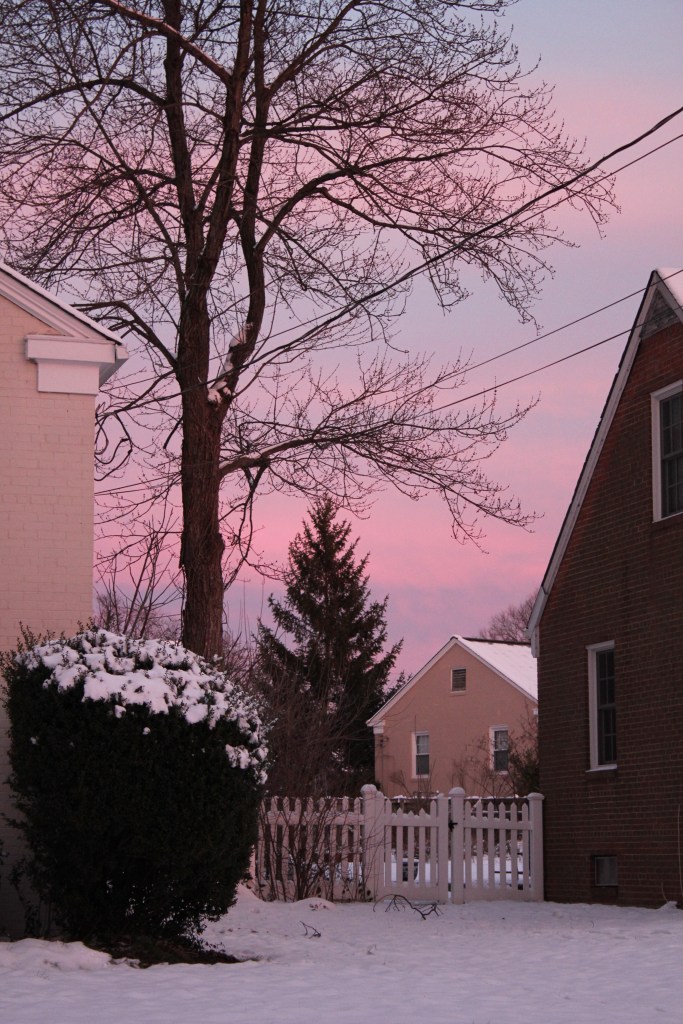
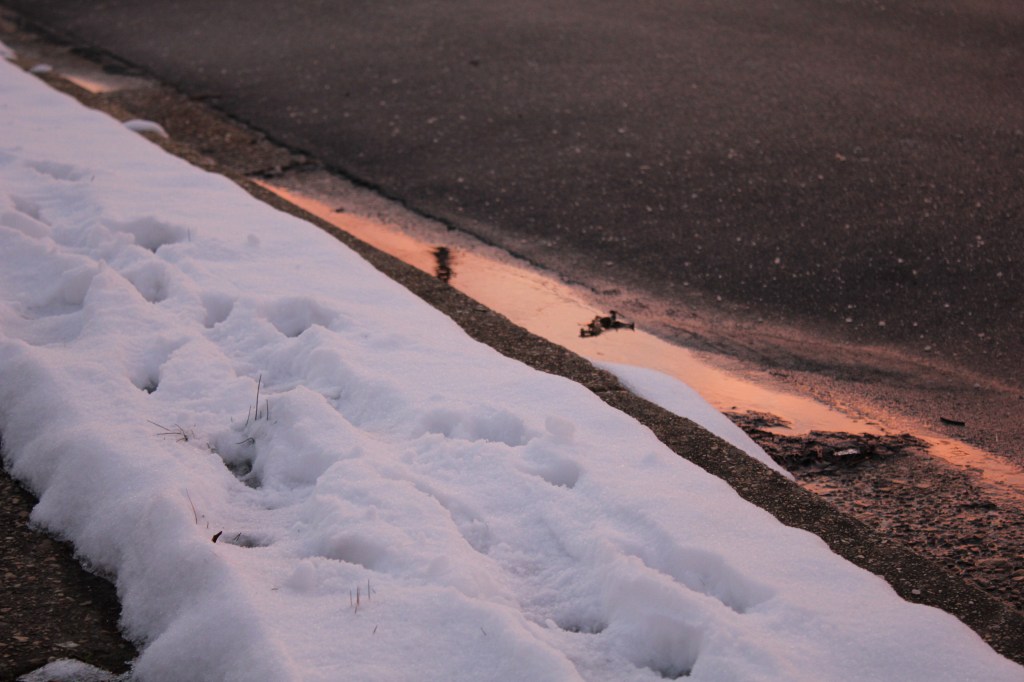
A few weeks ago we had our first real snowfall in two years, in fact, we had two snowfalls in a week and cold enough temperatures to keep the snow around longer. I love it when it snows here. Life comes to a halt, which is really quite beneficial for those of us who can’t slow down but desperately need to. As an artist, if you don’t find time to cultivate your craft, your purpose, and your inspiration, you can’t create meaningful work.

I’ve been reading and ruminating on T.S. Eliot’s Four Quartets recently, and the snowfall brought the imagery in this first section of “Little Gidding” to mind. I went out into the cold several times to ramble through the snow and take pictures. The world was aglow “with frost and fire/ The brief sun flames the ice, on pond and ditches.” I found this lonely, wilted rose in my garden covered in ice. It seemed poetic to me, this blossom left from the warmer months covered in the “transitory blossom of snow”.
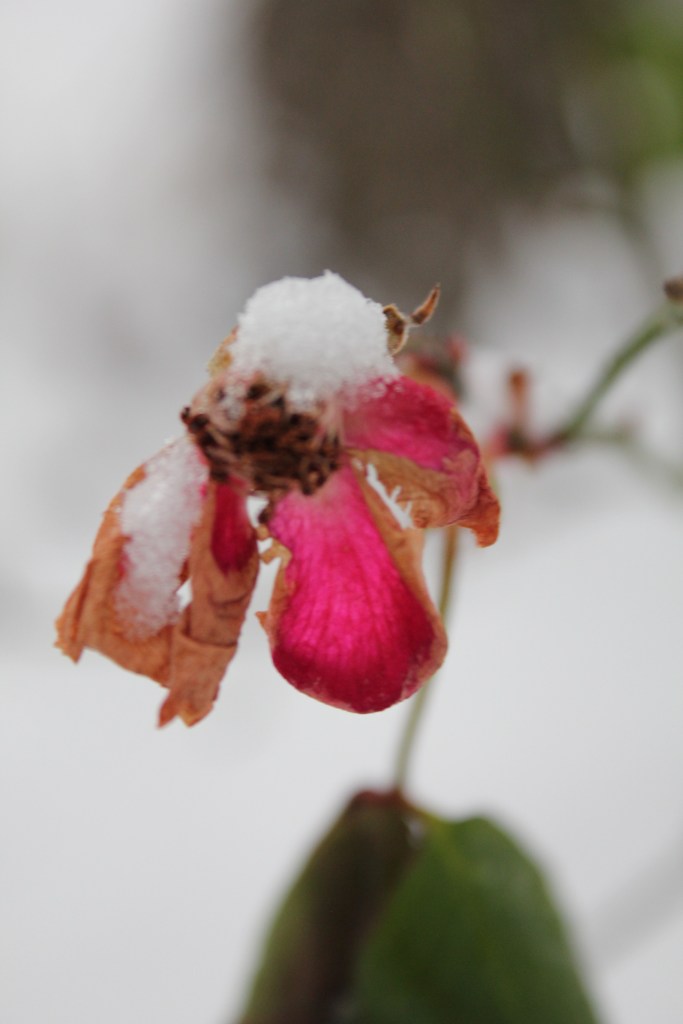
After photographing the rose, the imagery wouldn’t leave me, and the lingering snow prompted me to start a painting before the snow melted. Some people like to curl up with a book on a snow day (which I do at times), but snow always inspires me to grab a cup of tea and my paints and to start creating. Somehow, it’s the halting of the busy activities and setting aside media and replacing these with moments spent drinking in the beauty around you, that you feel that “glow more intense than blaze of branch, or brazier”.
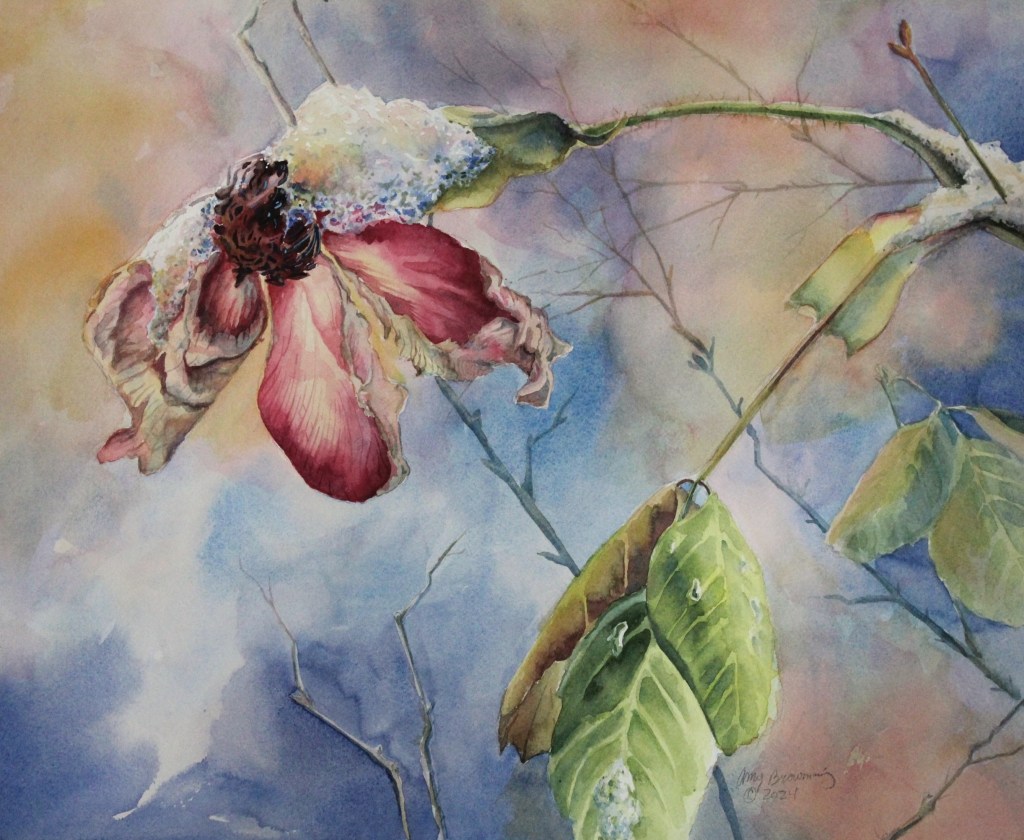
Although this is not an illustration of the poem, there is something about the imagery of the rose which also calls to mind for me a similar imagery from The Four Quartets. I think this was in my subconscious when I picked the rose to paint. “Little Gidding” ends with these lines: “When the tongues of flame are in-folded/ Into the crowned knot of fire/ And the fire and the rose are one.” While I’d like to dive more into the meaning of this ending, my post is more about my personal response to a section of the poem rather than its inherent meaning. I’ll save that for another time.

Well, I hope we get one more good snowfall this winter. There are a few more ideas about winter I’d like to explore before the flowers bloom, and I could use at least one more lazy snow day to do it.
Reflections on Creating the Solo Exhibit, Poiema, Mortality and Resurrection

In one of Rainer Maria Rilke’s letters to his wife he remarks about art: “Surely all art is the result of one’s having been in danger, of having gone through an experience all the way to the end, to where no one can go any further. The further one goes, the more private, the more personal, the more singular an experience becomes, and the thing one is making is, finally, the necessary, irrepressible, and as nearly as possible, definitive utterance of this singularity… Therein lies the enormous aid the work of art brings to the life of the one who must make it, that it is his epitome; the knot in the rosary at which his life recites a prayer, the ever-returning proof to himself of his unity and genuineness, which presents itself only to him while appearing anonymous to the outside, nameless, existing merely as necessity, as reality, as being-” (Letters on Cezanne, translated by Joel Agee, Fromm International Publishing Corporation, New York, 1985)

This quote resonated with me when I read it. My most recent solo exhibit closed at the end of October, and as I was driving home with the paintings, I reflected on my experience creating a body of work that had a deeper meaning to me personally than anything else I had done in the past. Poiema, Mortality and Resurrection is a series of paintings that explores themes of death, decay and new life as is experienced in the flora and fauna of the changing seasons. Juxtaposed to watercolor paintings are eggshells painted in acrylics, further illustrating the change of the seasons and the marching on of life. The paintings are accompanied by excerpts of poetry from Rainer Maria Rilke, David the Psalmist, the Anglo-Saxons and more.

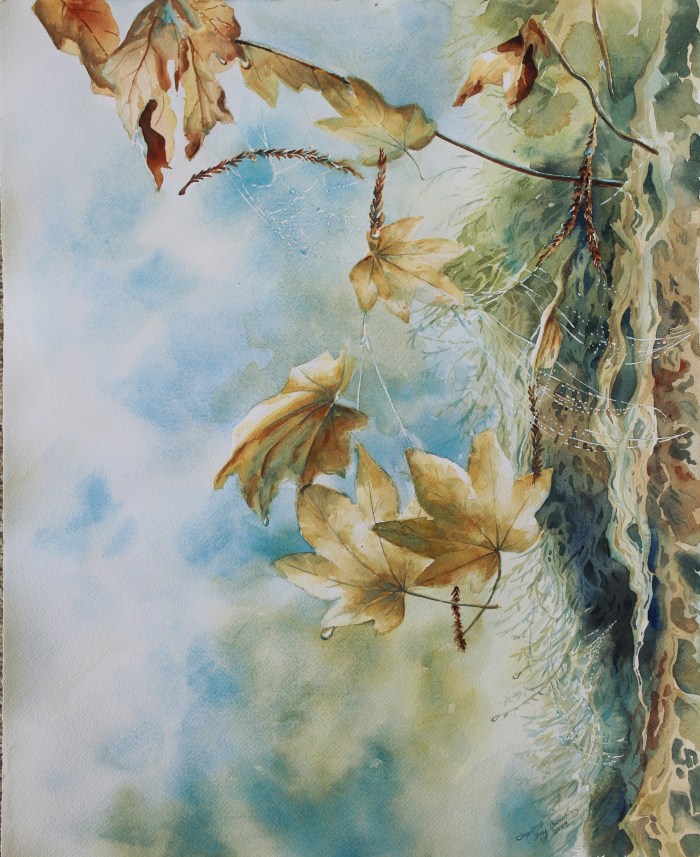
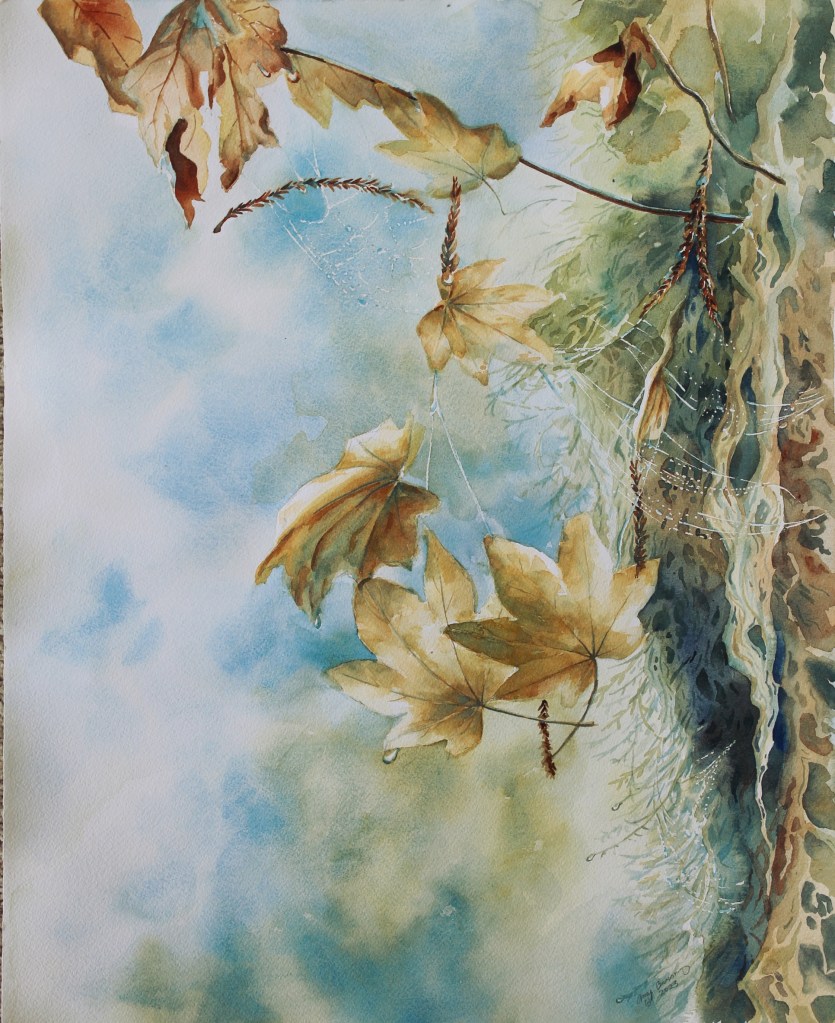
“Leaves Fallow and Softly Fall” Watercolor painting inspired by the Old English word “fallow” and Rilke’s poem, “Herbst” (Autumn).

The seeds of the concept for this series sprouted four years before, after a time when I was in danger, but until last year, I was hesitant to bring it to completion. This was for two reasons. One was that I had to deeply contemplate my own mortality in the process of creating it, and the other was I had to be open to sharing my personal beliefs about life, death and the resurrection. I believe the fear of being rejected is so much worse when you’re sharing a private aspect of yourself with the world. I had, however, heard it again and again from artists and actors that you should create work that is meaningful to you personally and it will also be meaningful to those who see it. This was my attempt at doing so, and why I encourage other artists to do the same.

This body of work was one where I drew from many creative sources for inspiration. Early on, I decided the paintings would be inspired by poetry after discovering Rilke’s poem, “Autumn”, and his description of Autumn that he wrote to his wife in his Letters on Cezanne. I later discovered a whole slew of Anglo Saxon poetry that highlighted life and resurrection in Winters in the World by Eleanor Parker, which ended up being my biggest resource. Basing a series around poetry forced me to read more than I have in nearly 20 years. I read Shakespeare’s sonnets, William Blake, the Psalms of David and Solomon, and others in an attempt to find poetry that would put into words what I wanted to express in images. Allowing poets to inspire me was like having a conversation with those poets across time. It was nourishing and rewarding to my artist soul.

“The Quickening of the Trees” Watercolor painting inspired by an Anglo-Saxon poem comparing the quickening of the trees with the resurrection of the dead at the end of time.

While I was painting, I contemplated a lot about life and purpose. I often weigh the importance of what I am making with my overall purpose, which is, frankly, raising my children and caring for the people around me. Is what I am making worth my time spent alone? Am I doing it to benefit my soul or others or is it for vainglory? (I admit having had created work for vainglory, and it wasn’t spiritually fulfilling. It’s a constant struggle as an artist. To clarify, creating for vainglory is different than creating for income.) As I was working on Poiema, Mortality and Resurrection, my work became both a meditation on life and mortality and oftentimes a prayer. Working on the paintings in the early morning hours before the household awoke helped me to organize my thoughts before starting the day. As I was creating the work, I thought that it didn’t matter as much if they’re seen by many people, because the act of painting changed me personally. I realized that this is one of the reasons to create what is important to you. Even if your work is not seen by many, you personally gain something from it. Rilke’s quote reminded me of my own experience: “Therein lies the enormous aid the work of art brings to the life of the one who must make it, that it is his epitome; the knot in the rosary at which his life recites a prayer”.

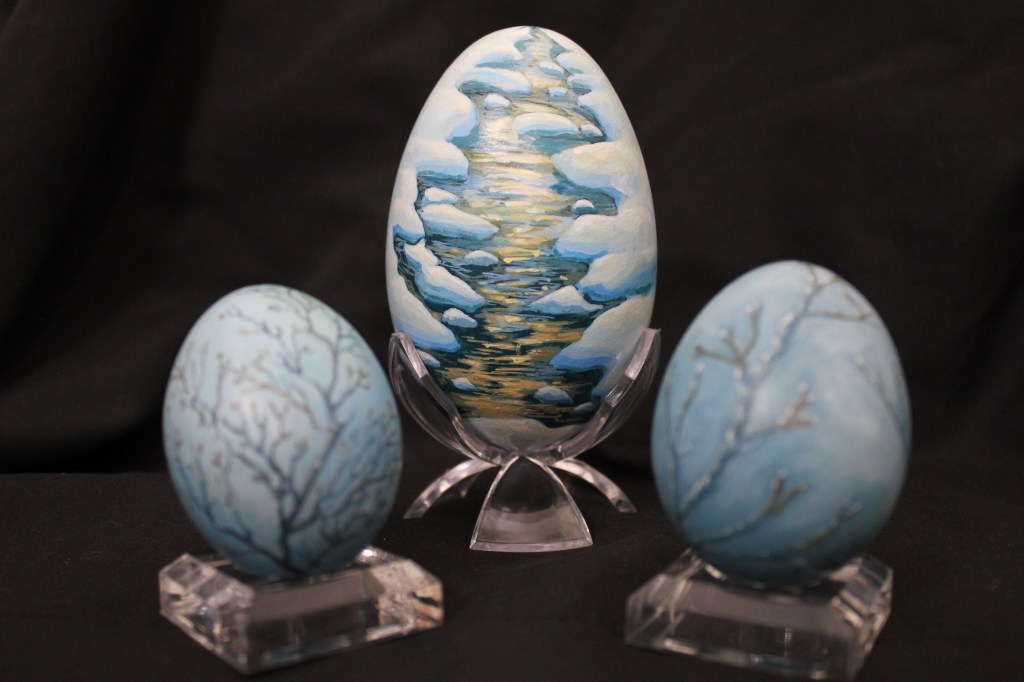
“Dormant”, “Unwind the Water’s Chains” and “Bone-Brittle Branches” Acrylic on Eggshells

In the end, I believe those who had said that if you connect with an idea, others will too, were correct. I kept a notebook with my paintings where visitors could comment on the exhibit. I had some write that they connected with the eggshells, because it reminded them of their childhood and family from Eastern Europe. Others wrote comments that made me realize they found the exhibit meaningful in other ways. This was my desire for this exhibit and knowing that others found it meaningful made it all the more meaningful to me. I hope to keep this in mind as I choose my projects in the future. Time is precious. It could either be spent trying to impress others and make yourself into what others think you should be, or being authentic in the projects you choose to work on, seeking what is true and benefiting yourself spiritually as well as others who see your work.

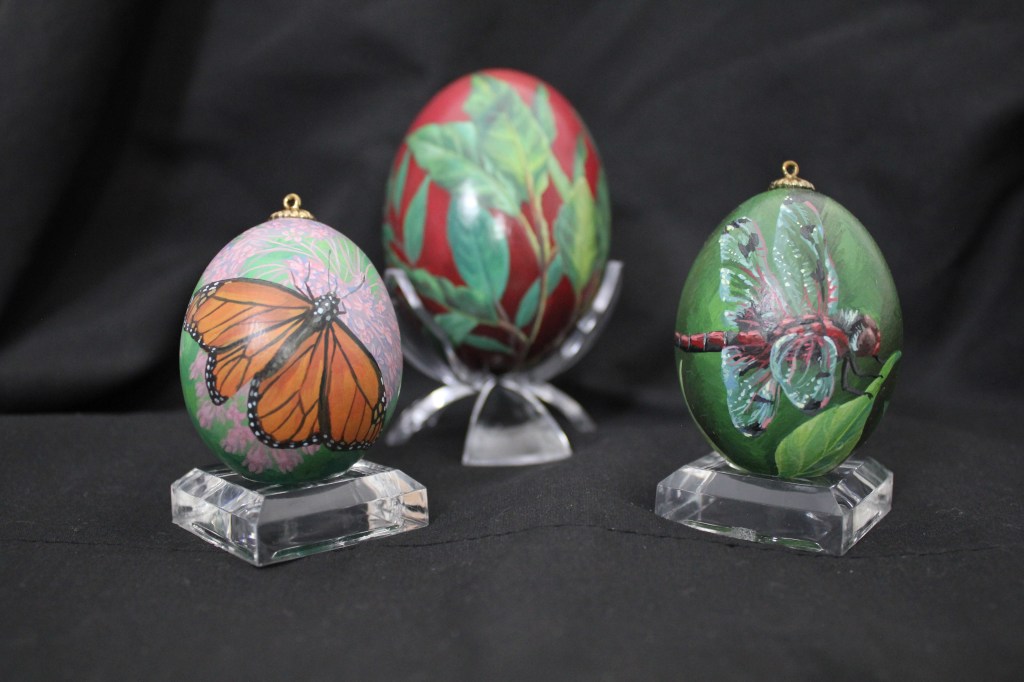
“Monarch”, “Victory”, and “Red Dragonfly – Harbinger of Life” Acrylic on Eggshells